
Our newest whitepaper for BH professionals working in the HHS space addresses the challenge of establishing statewide standards for behavioral health crisis services while considering the diverse capacities and resources across counties or multicounty regions. It outlines essential components of an ideal continuum of community behavioral health crisis services and provides benchmarks for service volume based on population size. Emphasizing the importance of proximity to services, it offers guidance tailored to small, medium, and large counties or regions, recommending collaborative planning for comprehensive crisis response systems within a one-hour drive.Includes specific insights and recommendations for meeting the BH needs of populations of small (less than 150,000), medium (up to 300,000) and large (>300,000) areas.
Category: Behavioral Health
Trends, Challenges and Opportunities in Behavioral Health Clinically Integrated Networks (CINs)
Trends, Challenges and Opportunities in Behavioral Health Clinically Integrated Networks (CINs)
Clay Farris, Kris Vilamaa, Steven Hedgepeth
Prefer to listen to a 3 minute audio summary? Click here
Intended readers: Community providers considering joining / forming a CIN, State HHS staff working with Community providers
Acronyms used in this article: Behavioral Health (BH), Centers for Medicare and Medicaid Services (CMS), Certified Community Behavioral Health Centers (CCBHCs), Clinically Integrated Networks (CIN), Electronic Health Records (EHRs), Emergency Rooms (ERs) , Independent Provider Association (IPA) , Office of the National Coordinator (ONC), Substance Use Disorder (SUD), Value-based Care (VBC)
Need help forming or managing a CIN? Check out the info at the end of this article to learn more about what we can do to help.
Introduction
Clinically Integrated Networks (CINs) represent a pivotal shift in the healthcare landscape, particularly in the behavioral health space. On the surface, CINs are collaborative arrangements among providers focused on improving quality and efficiency of care, while managing costs more effectively. CINs also play an important strategic role for both providers and plans: for providers CINs create a larger negotiating unit to broker better deals with plans on rates; for plans CINs create another layer of administrative cost that can be passed on to payers as part of the overall care coordination services plans provide. While much has been covered about other emerging BH payment vehicles like CCBHCs, BH CINs have not been widely covered outside their local contexts.
CIN formation is gaining momentum across various markets in the United States. However, the formation of CINs is not without challenges, ranging from the alignment of stakeholder goals to the integration of disparate data systems.
BH CINs offer much more potential to impact cost and care outcomes because the members they serve have some of the most severe needs. Members with BH needs are more likely to use ERs, have much higher health costs and are much more likely to be undiagnosed and untreated compared to members without BH needs.
Reasons for CIN Formation
For providers considering forming a CIN, there are multiple benefits. It is important to consider the main reason(s) you might form a CIN. Here are the typical reasons providers form (or join a CIN):
- Increase Acumen to Address the Shift Towards Value-Based Care: The broader transition to value-based care models is a significant driver for the formation of CINs. These models reward healthcare providers for the quality of care provided, rather than the volume of services delivered, thereby incentivizing collaboration and data sharing.
- Improved Care Coordination: CINs play a crucial role in facilitating seamless transitions between different behavioral health providers and specialties.
- Increased Bargaining Power with Payers: By banding together, CIN members can negotiate better reimbursement rates and more favorable contracts with insurance companies.
- Enhanced Data Analytics and Quality Improvement: The collective pooling of data within a CIN allows for advanced analytics, which can be used to identify care trends, optimize treatment pathways, and enhance the quality of care.
Challenges and Solutions in Early Stages
CIN formation and operation also includes several challenges. Here are some of the typical challenges:
- Alignment of Goals and Priorities: The diverse nature of stakeholders within a CIN can lead to conflicts of interest and differing priorities. While member organizations can gain initial alignment based on serving the same populations, providers (especially BH providers) often have very different cultures and operational models. Building a consensus and fostering trust early on are critical steps for overcoming these challenges. Strategies such as establishing clear communication channels and aligning incentives with the network’s overarching goals can facilitate this process.
- Data Integration and Interoperability: The need to leverage more modern technology is often the key driver in CIN formation (and there are multiple vendors selling solutions, which also drives CIN interest). Merging data from various electronic health records (EHRs) poses significant challenges. HThe implementation and ongoing operation of these systems can be a major challenge for providers- but rich datasets are the most important asset in improved system performance and negotiation with payers (especially under VBC arrangements).
- Regulatory Compliance and Legal Considerations: Navigating the complex legal and regulatory landscape of payer-provider relationships is paramount for CINs. Providing resources and best practices, such as compliance toolkits and expert legal counsel, can help CINs address these concerns effectively. Unfortunately many CINs are converged predominantly to stand up a technology platform, and often shortchange the governance framework needed to operate a multi-member entity.
- Financial Sustainability: The initial costs of forming a CIN and ensuring its long-term viability can be considerable. CINs may need to secure external funding or develop innovative revenue streams, such as shared savings programs.
Examples of CINs
Technologies for CIN Success
Technology plays a key role in capturing all the data that CIN-participating providers need to coordinate services, monitor VBC performance and to get paid. Here are the main types of technology usually involved:
- Interoperable EHR Systems: The adoption of interoperable EHR platforms is essential for facilitating data sharing and information exchange across CIN-participating providers. CMS has recently focused on interoperability and EHR systems for BH, and ONC is working on adding behavioral health integration measures in version 4 of its core datasets for interoperability.
- Telehealth and Remote Care Tools: Telehealth technologies have emerged as a vital component for delivering behavioral health services coming out of the COVID-19 pandemic. CINs utilizing telehealth effectively are able to reach specific populations or conditions, especially in underserved areas.
- Data Analytics Platforms: The use of sophisticated data analytics tools is critical for performance measurement, quality improvement, and population health management within CINs. These platforms enable CINs to leverage their collective data for insightful analysis, decision-making and VBC payment arrangements.
Conclusion
CINs are currently limited, but at the forefront of transforming healthcare delivery. Behavioral health CINs present the most significant opportunity for impacting quality and costs because of the higher needs of the members they serve and the overall system maturity level of most BH networks.
Through improved care coordination, enhanced bargaining power, and advanced technologies, CINs can quickly make progress. However, addressing the challenges of goal alignment, data integration, regulatory compliance, and financial sustainability is crucial for CINs. As payment pressures on providers increase, the need to form successful CINs will also increase. Payers should look to support smaller providers’ participation in well-organized and governed CINs as part of their effort to improve patient access and control costs.
Need help planning, forming or operating a CIN focused on BH providers and members?
Our team has decades of experience helping to transform the behavioral health system. We focus on assisting HHS agencies (state and local) craft and evaluate policies, and we help community providers implement system change directly. To learn more about what we can do to help you implement or improve a BH CIN, send a note to steven.hedgepeth@mostlymedicaid.com.
Further Reading
- Setting the Foundation for a 7 Steps Playbook Clinically Integrated Network, Conifer Health Solutions. https://www.coniferhealth.com/wp-content/uploads/Conifer-Health-7-Steps-CIN-eBook.pdf
- ‘The time is now for clinically integrated networks’, Lia Novotny. https://www.athenahealth.com/knowledge-hub/practice-management/time-now-clinically-integrated-networks
- A Path to Clinical Quality Integration Through a Clinically Integrated Network: The Experience of an Academic Health System and Its Community Affiliates, Lawrence S. Friedman, MD, et al. The Joint Commission Journal on Quality and Patient Safety. https://www.jointcommissionjournal.com/article/S1553-7250(20)30240-3/fulltext
- Increasing Access to Behavioral Health Services: Opportunities at the State and Federal Level. Miriam Pearsall, Sandra Wilkniss. https://nashp.org/increasing-access-to-behavioral-health-services-opportunities-at-the-state-and-federal-level/
- Arizona Behavioral Health Providers Form Clinically Integrated Network. David Raths. https://www.hcinnovationgroup.com/population-health-management/behavioral-health/news/21284730/arizona-behavioral-health-providers-form-clinically-integrated-network
- Integral Health Network of Southern Arizona to assume clinical and fiscal responsibility to assume clinical and fiscal responsibility for Banner – University Health Plans Members diagnosed with co-morbid medical and behavioral health conditions. https://www.bannerhealth.com/newsroom/press-releases/integral-health-network-of-southern-arizona-to-assume-clinical-and-fiscal-responsibility
- Success in our state. https://clinisync.org/wp-content/uploads/2022/03/ISBH-Success-Story.pdf
- About Convergence Integrated Care. https://www.macmhp.org/about-cic
- CIN Case Study: Coordinated Behavioral Care IPA. How an innovative independent practice association streamlined social service referrals. https://www.chcf.org/cin-case-study-coordinated-behavioral-care-independent-practice-association/
- CLINICALLY INTEGRATED NETWORKS: BUSINESS AND LEGAL CONSIDERATIONS. Claire Turcotte. https://ohiohospitals.org/getattachment/Member-Services/Personal-Membership-Groups/OSHRM/Turcotte-Yanci-Presentation.pdf.aspx
- HHS Roadmap for Behavioral Health Integration. https://www.hhs.gov/about/news/2022/12/02/hhs-roadmap-for-behavioral-health-integration-fact-sheet.html
- Rural hospitals form clinically integrated network in North Dakota. ALEX KACIK. https://www.modernhealthcare.com/providers/north-dakota-critical-access-hospitals-network
- Reimagining rural health care with integrated networks. DANNY SCHMIDT. https://realeconomy.rsmus.com/reimagining-rural-health-care-with-integrated-networks/
- Key Considerations in Forming, Operating or Joining a Clinically Integrated Network (CIN) . American Medical Association. https://www.ama-assn.org/system/files/private-practice-checklist-cin-considerations.pdf
- Why Join a Clinically Integrated Network? North State Quality Care Network. https://nsqcn.org/network/why-join-a-clinically-integrated-network/
- About My Texas Health. https://texascin.com/#86b7060c-3683-4bef-b733-824d0c9fa65b
SAMHSA Releases Revision to 42 CFR Part 2 Substance Use Disorder Privacy Rule

SAMHSA Releases Revision to 42 CFR Part 2 Substance Use Disorder Privacy Rule
SAMHSA has released a revision to 42 CFR Part 2, the rule that governs privacy around substance use disorder information (https://www.hhs.gov/about/news/2020/07/13/fact-sheet-samhsa-42-cfr-part-2-revised-rule.html)
A number of these changes have been requested by advocates for years, if not decades. They are welcome changes and will be embraced by all who want to see better coordination of care for individuals with substance use disorders.
This is only one step in a process, as it is not the rule in response to the change passed in the CARES Act, this change was in the works prior to that law’s passage.

Join us for: What Does the Future Hold for Ohio Providers Following Behavioral Health Redesign?
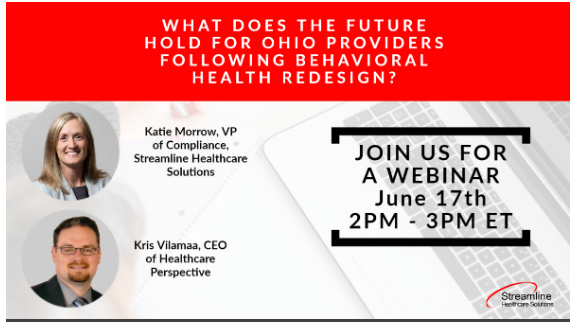

Since 2018, the state of Ohio has gone through major changes in healthcare with the implementation of behavioral health redesign and the carve-in of behavioral health services to managed care. The program was designed to increase access to client care for those seeking mental health and substance abuse treatment as well as improve accuracy in billing. We are expecting more changes in the coming year, with a new request for proposals coming out for managed care in Ohio. Using the right electronic health record (EHR) technology is key to the success of navigating through future changes in billing and other reporting requirements in Ohio. Streamline understands this need.
We are teaming up with Streamline, Kris Vilamaa, CEO of Healthcare Perspective will review the evolution of the Behavioral Health Redesign initiative. Kris will share his knowledge and trends from where Ohio was prior to the Initiative to where things stand today, what the future holds for Ohio, the impacts of COVID-19 to the Medicaid system, and how it will affect the state’s Medicaid finances.
Katie Morrow, VP of Compliance with Streamline, will walk you through key functionality within SmartCare™ EHR that is specific to Ohio Redesign. She’ll share the importance of using a system that is flexible and extensive to meet your needs now and into the future. Furthermore, she’ll dive into the SmartCare platform to show how it’s been successful in adapting their system to meet the needs of the Ohio Behavioral Health Redesign initiative.
Wednesday, June 17th
2:00 – 3:00 PM ET

COVID-19 Resources
COVID-19 Resources
HealthCare Perspective hopes everyone is following the guidance of their state and local health officials during this pandemic. Our mission has always been helping people who help people and we know there are so many helpers out there doing their part in response to COVID-19, many risking their health and lives in the process. We also know this is a time when mental health and substance use disorders could become exacerbated.
Here are some resources we have identified that may be helpful during this time and don’t hesitate to reach out to our team for any other information you are seeking during these challenging times. We are here to help.
Virtual Recovery Resources from SAMHSA
The Ohio Medicaid Program “was a mess” – Are They Fixing It?
The Ohio Medicaid Program “was a mess” – Are They Fixing It?
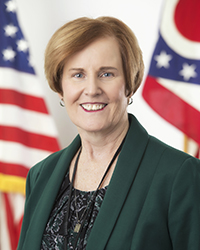
Earlier this week, Ohio Department of Medicaid Director Maureen Corcoran sent a memo that was titled “2019 Year End Summary” to her boss, Ohio Governor Mike DeWine.
- Ohio Medicaid Director Blasts Kasich Administration For Leaving Behind Big Problems – Statehouse News Bureau – https://www.statenews.org/post/ohio-medicaid-director-blasts-kasich-administration-leaving-behind-big-problems
- Ohio Medicaid Director Said DeWine Administration inherited “mess” – Dayton Daily News – https://www.daytondailynews.com/news/local/ohio-medicaid-director-said-dewine-administration-inherited-mess/aiX56ypkH6VpL6QYnWjTWP/
The memo (full text here) outlines a series of challenges that the previous Governor’s administration left behind for DeWine and Corcoran to fix. Most of these challenges were well known within the state, but seeing them assembled in this way is jarring and shows some real failures on the part of the previous administration. And the current administration should be applauded for its transparency. With transparency also comes the opportunity to use exactly these metrics to hold the current team accountable to improvement.
Director Corcoran reserves most of her most pointed commentary for the behavioral health redesign. Having been through the changes, working with several providers in Ohio, there could be disagreements on several of the points made about the implementation of the redesign. There is a share of the lack of preparation that falls on the providers that she seems to ignore.
Many, many providers in Ohio pretended the changes were never going to happen or fought tooth and nail to delay them for as long as possible. When they actually did occur, they had not made the system or operational changes needed to be a part of the new delivery system. While there is certainly plenty of blame to place on ODM and the MCO’s for not adequately testing systems, there was also deep resistance from many providers to participate in the testing that was made available prior to the changes.
The provider agencies that went out of business were those who refused to acknowledge the position they were in in time to be offered assistance. The ADAMH boards, ODM and the Ohio Mental Health and Addiction Services Department all showed a willingness and ability to prop up providers in need when they asked. Fear of looking like they didn’t know what they were doing is what drove the providers who did close to not raise their hands until it was too late, if they did at all.
The noncompliance with the Institutions of Mental Disease (IMD) exclusion requirements is also glossed over a bit here. While the approval of a Medicaid 1115 demonstration waiver addresses the problem going forward, the state and CMS have not yet addressed the period of time when ODM was paying for services in IMDs (treatment facilities over 16 beds) but was not authorized to do so. The state clearly took responsibility for allowing this by the guidance they gave providers at the time. Won’t the state have to negotiate some kind of settlement for those unallowable claims?
Returning to the totality of the issues addressed by this memo, we should get a follow up on all of these items at the end of 2020 and be able to measure the progress that has been made. Many of these challenges will not be easy to fix, but neither can they afford to be ignored for another year.
Metrics for Ohio Department of Medicaid in 2020
- Payment Error Rate Measurement Audit – Next audit cycle, how much is Ohio’s error rate for eligibility determination reduced? The 2019 audit found a rate of 43.49%, double the national average of 20.6%.
- Audits and Internal Controls – Have duplicative capitation payments been recouped? Have corrective actions been taken on findings form the Group VIII Eligibility audit that is currently pending? Has ODM recovered managed care capitation payments for deceased beneficiaries? Has ODM recovered managed care capitation payments on behalf of members with concurrent eligibility in another state?
- Unaddressed Medicaid Caseload Backlog and Ohio Benefits – What is the current backlog?
- Ohio Benefits: Process and Information Technology Systems Defects – Where is ODM on its plan to correct the flawed system and what progress has been made in 2020?
- Managed Care: Capitation Rate Corrections – Has there been improvement in the ability to get actionable data in a more timely manner?
- Behavioral Health Redesign: Stabilization and Correction – Where are we at the end of 2020 on this work? (the centralized credentialing system go live already has had a hiccup just this week)
- Behavioral Health: Institutions for Mental Diseases Compliance and Financing – This is glossed over a bit in the memo – what is being done to deal with the IMD noncompliance prior to the approval of the waiver? Is there an anvil hanging over Ohio’s head that will require paybacks to the federal government?
- Nursing Home policy that creates significant financial burdens for future state budgets – What path forward has been established for nursing homes and what are the new expectations for rates?
- Medicaid Pharmacy Benefit Managers: Lack of Transparency, Accountability and Oversight – What is the status of the PBM at the end of 2020? What has happened to pharmacy costs as a result?
- Community Engagement and Work Requirements Waiver: Need for Transparency and Genuine Effort to Achieve Meaningful Employment – What has happened to the employment rate of people on Medicaid? What has happened to the enrollment numbers as a result of implementing work requirements?
- Inaction on Multi-System Youth, Custody Relinquishment and Other Children’s Behavioral Health Issues – What changes have been implemented as a result of the efforts around children at-risk for custody relinquishment?
Again, transparency is a great thing, but with greater transparency comes greater accountability for the items on which you choose to raise attention. The Ohio Department of Medicaid and other state agencies can always do better, but it is up to the stakeholders and the general public to hold them accountable to what they say they want to accomplish over the long haul of a gubernatorial term of office.